Data First, AI Second. Why Your Salesforce Data Matters More Than Ever
AI is everywhere right now. New tools. New features. New promises. It can feel like the entire industry flipped a switch overnight. But during our recent webinar with Validity, one theme stood out above everything else: your AI is only as good as the data underneath it.
That idea guided the entire conversation. AI can summarize, recommend, or even take action inside Salesforce, but it cannot guess what you meant or fill in gaps caused by years of inconsistent data. If the foundation is weak, everything you build on top of it will wobble.
This is why the real starting point for AI is not prompts or agents. It is clean, dependable information inside your CRM.
Watch the Whole Webinar Here

AI Is Evolving Fast. Expectations Are Rising With It.
Salesforce introduced Einstein years ago, long before generative tools dominated the conversation. Einstein focused on prediction. Generative features then expanded into content creation and automated writing. Now Agentforce represents a new stage, where systems can take action inside Salesforce based on rules you define.
That shift raises expectations for accuracy. A human can review a report and mentally filter out bad records. AI cannot. It takes your data at face value. Outdated opportunities, inconsistent account names, or duplicate contacts all become part of the output.
Security Is Strong, but Quality Still Matters
Salesforce has built a strong trust layer around AI. Masked fields, zero retention by external models, guardrails on prompts, and full audit access all help protect sensitive information.
But none of these safeguards fix duplicate accounts or inconsistent address fields. AI still needs information it can rely on. That means data that is complete, consistent, and structured in a way systems can interpret correctly.
What AI-Ready Data Looks Like
Across the building products, construction, and distribution organizations we support, the same pattern shows up again and again. Teams move fastest when their Salesforce data includes:
• One record per actual customer
• Well-structured addresses, phone numbers, and picklists
• Consistent naming across contacts and accounts
• A simplified data model aligned to current processes
• Clean data flowing in from every new import
Once these basics are in place, AI can summarize customers accurately, prioritize opportunities with confidence, and support teams without introducing confusion.
How Demand Tools Helps Clean and Maintain Salesforce Data
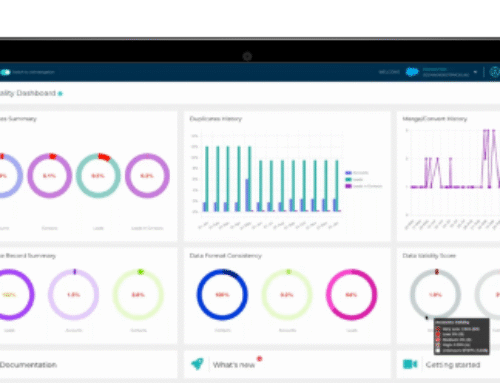
During the webinar, the Validity team demonstrated how DemandTools supports dependable data at scale. It reduces manual cleanup and helps protect your CRM from future clutter. Three areas stand out.
Dedupe
Dedupe identifies and merges duplicate records across any Salesforce object. It can:
• Detect matches even with different spellings
• Ignore suffixes like Inc or LLC
• Recognize nicknames
• Select the best record based on defined rules
• Reassign related records before merging
The result is a single, complete customer profile instead of multiple fragmented versions.
Modify
Modify enables bulk updates across large sets of records. Teams use it to:
• Clean up account names
• Standardize addresses
• Fix casing inconsistencies
• Apply consistent phone and postal code formats
• Align picklists to real-world usage
This brings legacy data up to a dependable standard.
Import
Instead of introducing new problems, Import validates incoming data before it enters Salesforce.
• Identifies existing matches
• Updates records where appropriate
• Creates new records only when necessary
• Applies formatting rules automatically
This keeps your CRM cleaner over time, not just after a one-time cleanup.
Hunley’s AI Starter Approach
Many teams want to adopt AI but feel overwhelmed by the scope. Our approach keeps the focus on progress rather than perfection.
We guide clients through a clear path:
• Identify where AI can support sales, marketing, and operations
• Review Salesforce data readiness
• Select one or two high-value use cases
• Build a limited proof of concept
• Expand into a pilot and broader rollout
This method delivers early wins while laying the groundwork for long-term success.
Moving Forward
If you are unsure whether your Salesforce data is ready for AI—or you already know it needs attention—we can help assess your current state and create a plan that supports both cleanup and future AI initiatives.
When your CRM data is accurate and dependable, AI becomes dramatically more useful. Data first. AI second. That sequence works every time.